Research and data context
Privacy, research inputs and responsible use of AI infrastructure information
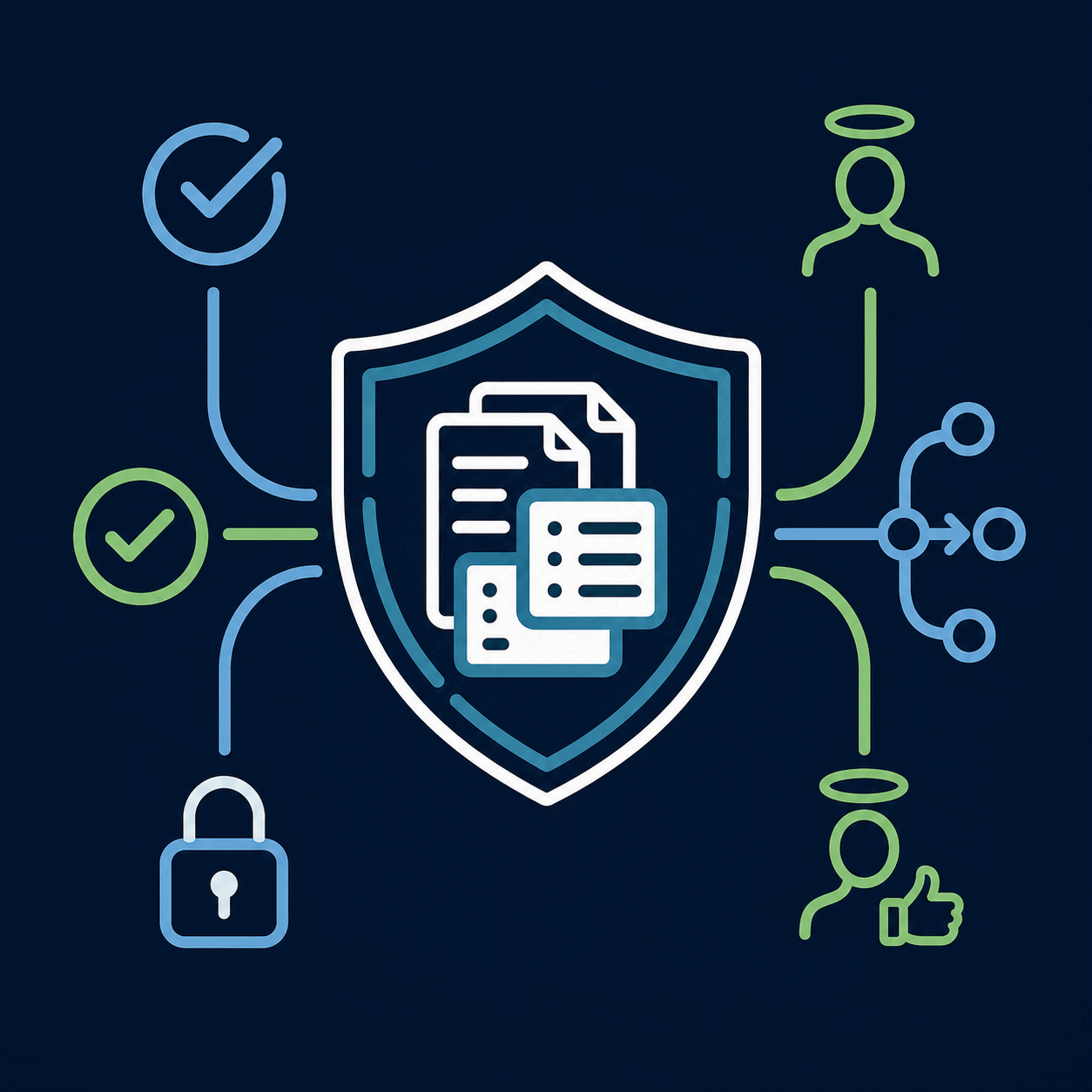
AIDataCenterHQ is an information and research platform, and privacy questions can arise in several different contexts: ordinary website use, contact enquiries, research submissions, commercial discussions and project-specific consultation. These contexts should not be treated as identical. Public browsing may involve routine technical data needed to deliver a website, while a consultation enquiry can contain business information supplied voluntarily by the sender. The Privacy Policy above describes the site’s operative privacy terms; this research section explains why information discipline matters when working with AI infrastructure material.
Data-center and AI-infrastructure projects can involve commercially sensitive facts such as planned capacity, target geography, accelerator requirements, customer demand, power constraints, provider quotes, utilization assumptions or unpublished technology plans. A public contact form should not be used as a substitute for a formal secure data-exchange process when such information is highly confidential. The practical starting point is data minimization: share what is needed to explain the decision and avoid unnecessary personal or proprietary information until an appropriate project process is established.
Research provenance and personal information are different issues
Research quality depends on being able to identify where factual claims came from, but source provenance does not require collecting unnecessary personal data about site visitors. Public research can rely on institutional reports, standards, technical documentation, regulatory filings, company disclosures and other published evidence. When individual experts are cited, the relevant professional authorship may be important to provenance. This is different from collecting visitor-level information that has no role in answering the research question.
Project-specific inputs should be classified before use
A useful consultation can separate material into public information, client-supplied factual inputs, assumptions, confidential commercial context and derived analysis. This classification makes it easier to understand which statements can be cited publicly and which should remain within the project. It also reduces the risk of treating an unverified internal assumption as an external fact. For technical and financial models, recording the source and date of each variable improves both reproducibility and privacy control because only necessary inputs need to be retained.
AI tools do not remove information-handling responsibilities
Generative and analytical tools can help organize research, compare documents and identify relationships, but their use does not change the need to consider confidentiality, accuracy and appropriate access. NIST’s AI Risk Management Framework emphasizes governance, measurement and risk management around AI systems. For infrastructure research, a practical application of the same principle is to decide which information can be processed in a given workflow, verify consequential outputs against authoritative sources and keep sensitive project material separate from public content unless disclosure is authorized.
Public data can still require context
Information may be publicly available and still be easy to misuse. A company announcement can describe planned capacity that has not yet been delivered; a market report can use a definition different from another source; a quoted GPU price can omit commitment terms or ancillary charges. Responsible research therefore records scope, date and limitations rather than assuming that public means universally comparable. This discipline improves accuracy without requiring additional personal data from the reader.
Contact enquiries should focus on the decision need
Users seeking a consultation can usually begin without sending sensitive files. A first enquiry can state the objective, general geography, approximate scale, timeline and type of decision. More detailed documents can be discussed later if they are necessary to the work. This staged approach supports both efficiency and privacy because the project can be scoped before collecting information that may not be required.
Retention should follow purpose
Good information governance asks why a piece of data is being kept and whether it is still needed. Research sources may need to be retained for reproducibility and citation, while enquiry information may be needed to respond to a request or manage an engagement. The operative Privacy Policy should control the actual site practice. From a research-method perspective, the broader principle is that retention should be connected to a legitimate operational or evidentiary purpose rather than indefinite accumulation.
Security and privacy are related but not interchangeable
Security controls protect information against unauthorized access or loss; privacy governs appropriate collection, use and handling of information. Both matter when AI infrastructure projects involve commercial plans, technical designs or business data. Users should avoid sending credentials, secrets or highly sensitive material through ordinary website channels. Project-specific secure handling requirements should be agreed before such information is exchanged.
This explanatory section does not replace the Privacy Policy above, and it does not create additional legal commitments beyond the operative policy. It is intended to help users understand how privacy connects with evidence quality, consultation workflows and research governance on an AI infrastructure platform. Questions about the site’s privacy practices or project-specific information-handling expectations should be raised through the contact page before sensitive material is supplied.